Efficient resource allocation is essential for keeping projects on schedule, managing workloads, and making the best use of available skills. For project-based teams, however, allocation is rarely as simple as assigning an available employee to an open task. Managers need to consider skills, capacity, project priorities, deadlines, existing commitments, and changing business requirements.
When these factors are managed together, teams can improve resource allocation efficiency and reduce common problems such as over-allocation, underutilization, scheduling conflicts, and project delays.
The goal is not to keep every employee busy at all times. It is to make sure resources are assigned where they can create the most value while maintaining a realistic workload.
What Is Resource Allocation Efficiency?
Resource allocation efficiency refers to how effectively an organization assigns its available resources to projects, tasks, and business priorities.
Resources can include people, skills, working hours, budgets, equipment, and technology. In most project-driven businesses, people are the most important resource, but their availability alone does not determine whether an allocation is effective.
For example, an employee may have free hours but lack the skills required for a particular project. Similarly, assigning a highly experienced employee to several urgent projects at once may appear efficient initially but can create workload problems later.
Efficient allocation therefore requires a balance between capacity, skills, workload, priorities, and project requirements.
Why Is Efficient Resource Allocation Important?
Poor allocation can affect both project performance and employee workload. A project may have enough people overall but still experience delays because the right skills are unavailable at the right time.
Efficient allocation helps organizations make better use of their existing resources while identifying potential problems earlier.
| Efficient Resource Allocation | Inefficient Resource Allocation |
|---|---|
| Matches skills to project requirements | Assigns resources mainly based on availability |
| Balances workloads | Creates repeated over-allocation |
| Provides visibility into capacity | Relies on assumptions or scattered information |
| Supports realistic deadlines | Creates avoidable delays |
| Uses available talent effectively | Leaves some capacity underused |
The difference is not simply about how many people are working. It is about whether the right people are working on the right priorities at the right time.
Common Resource Allocation Challenges
Before improving allocation, organizations need to understand what makes it difficult.
Limited visibility into availability
A manager may know that an employee is part of the team but not know how much of their working capacity is already committed to other projects.
Skills and availability do not always match
An available resource is not necessarily the right resource. Projects often require specific technical, creative, consulting, or industry expertise.
Changing project priorities
Client requirements, deadlines, and business priorities can change quickly. A resource plan that worked at the beginning of a project may need to be adjusted later.
Over-allocation
High-performing employees are often assigned to multiple important projects. Without visibility into their overall workload, this can result in excessive commitments and competing priorities.
Manual planning
Spreadsheets and separate calendars may work for smaller teams, but maintaining multiple schedules, project assignments, leave records, and workload calculations manually becomes increasingly difficult as the organization grows.
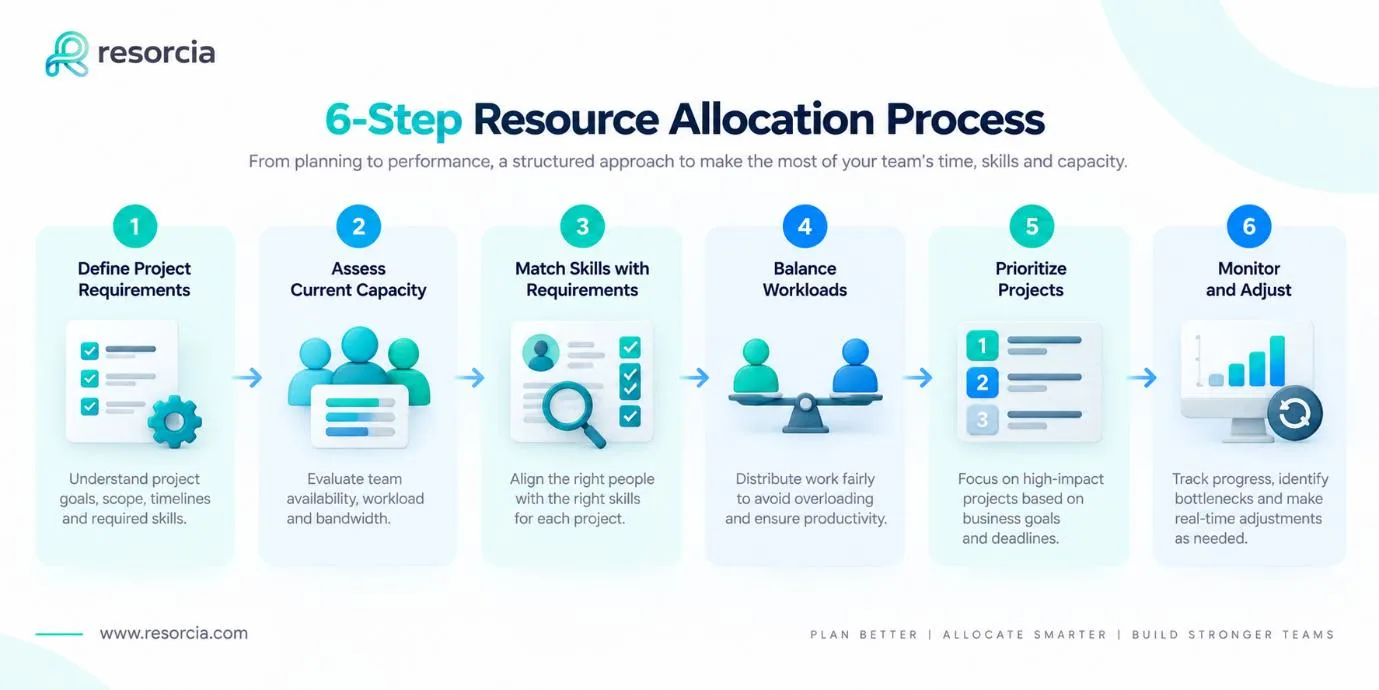
How to Allocate Resources Efficiently
A structured allocation process helps managers make decisions consistently instead of reacting to problems after they occur.
1. Define project requirements
Start by identifying what the project actually needs. Consider the required skills, roles, number of resources, estimated hours, project duration, deadlines, and priority.
A clear requirement makes it easier to determine which resources are suitable and how much capacity is needed.
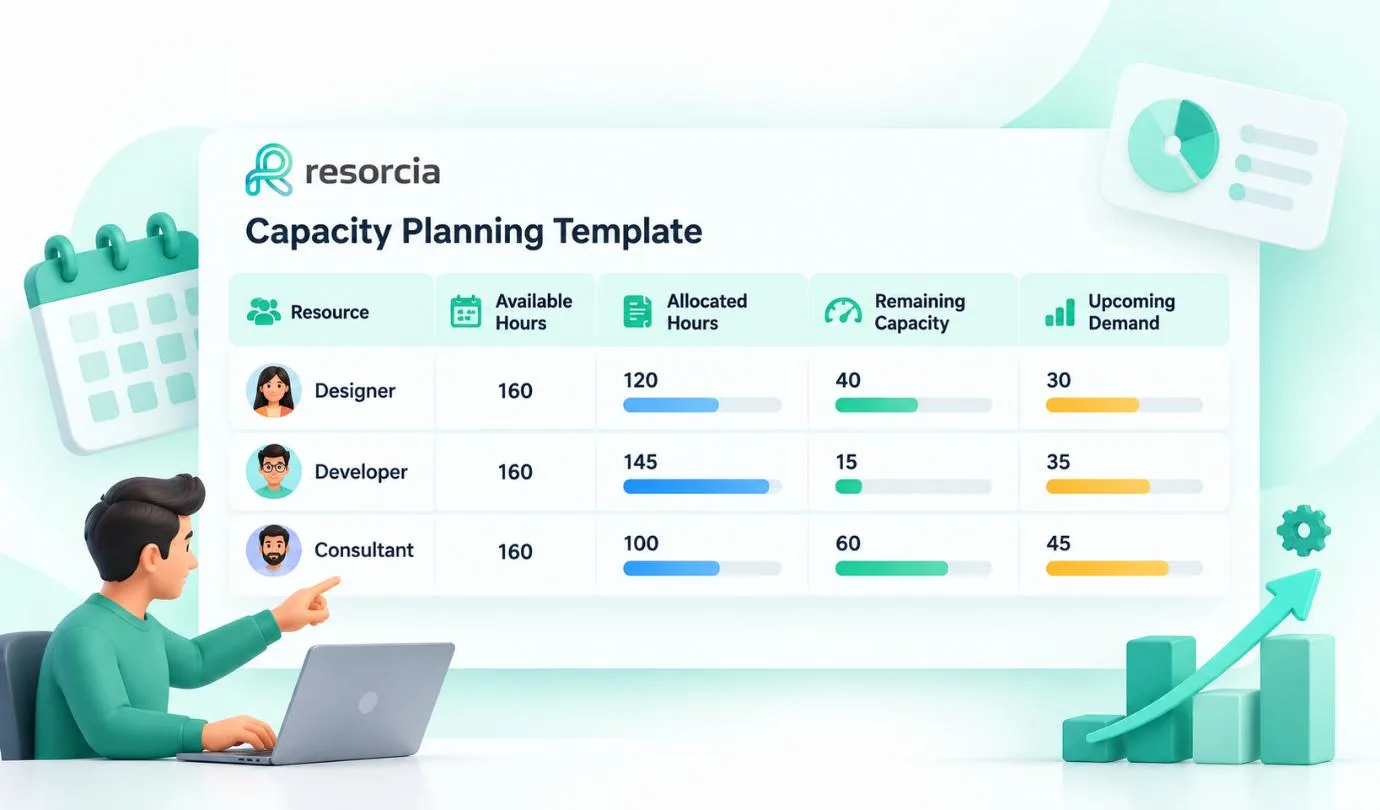
2. Assess current capacity
Before assigning new work, check existing commitments.
Consider current project assignments, planned leave, holidays, and other responsibilities. Someone who appears available may already have limited capacity once all commitments are considered.
3. Match skills with requirements
Once capacity is understood, compare available resources with the skills needed for the project.
The person who becomes available first is not necessarily the best choice. Relevant experience and expertise can be just as important as availability.
4. Balance workloads
Check how much work each resource is already handling before making a new assignment.
The objective is to avoid both extremes:
- Over-allocation: A resource is assigned more work than they can realistically handle.
- Underutilization: Available capacity is not being used effectively.
A balanced workload creates more realistic expectations for both employees and project managers.
5. Prioritize projects
When resources are limited, not every project can receive the same level of attention.
Consider factors such as:
- Client commitments
- Project deadlines
- Business impact
- Strategic importance
- Revenue potential
- Project risk
This helps organizations direct limited capacity toward their most important requirements.
6. Monitor and adjust
Resource allocation should not be treated as a one-time decision.
Projects change, people take leave, deadlines move, and new work arrives. Regular reviews help managers identify capacity changes and adjust assignments before they create larger delivery problems.
Resource Allocation Methods
Organizations may use different approaches depending on their projects, team structure, and operating model.
| Method | How It Works | Suitable For |
|---|---|---|
| Demand-based allocation | Resources are assigned according to current project demand | Frequently changing projects |
| Skills-based allocation | Resources are selected according to required expertise | Specialized projects |
| Priority-based allocation | Resources are directed toward higher-priority work | Limited-capacity teams |
| Capacity-based allocation | Assignments are made after assessing available capacity | Teams handling multiple projects |
Most organizations combine these approaches rather than relying on a single method.
How Technology Improves Resource Allocation Efficiency
Technology can make allocation easier by bringing information about resources, projects, schedules, workloads, leave, and time tracking into a more connected view.
Instead of checking multiple spreadsheets or asking different managers for updates, teams can work with centralized information when making allocation decisions.
A resource management platform can help teams:
- View resource availability
- Track project assignments
- Identify workload imbalances
- Manage schedules and bookings
- Account for leave and holidays
- Track actual time spent
- Review resource reports
- Adjust assignments as project requirements change
The value is not simply automation. Better visibility gives managers better information for making allocation decisions.
How Resorcia Supports Resource Allocation Efficiency
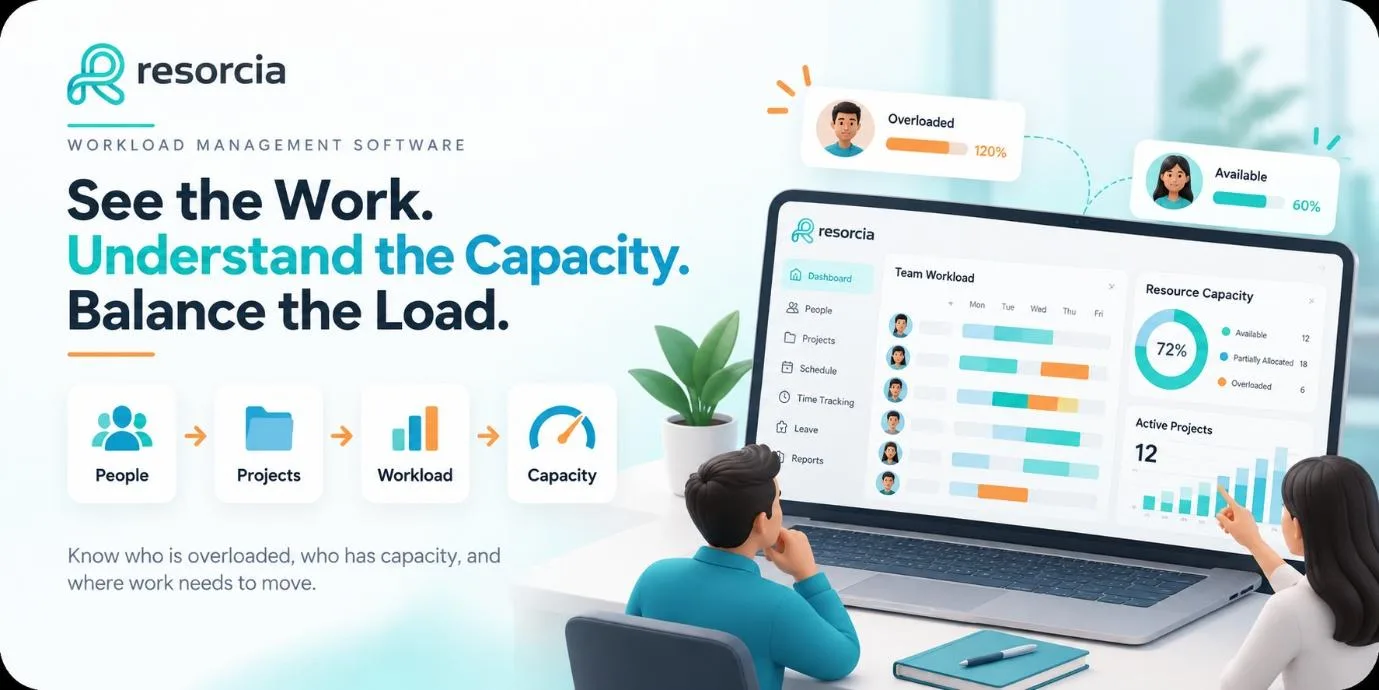
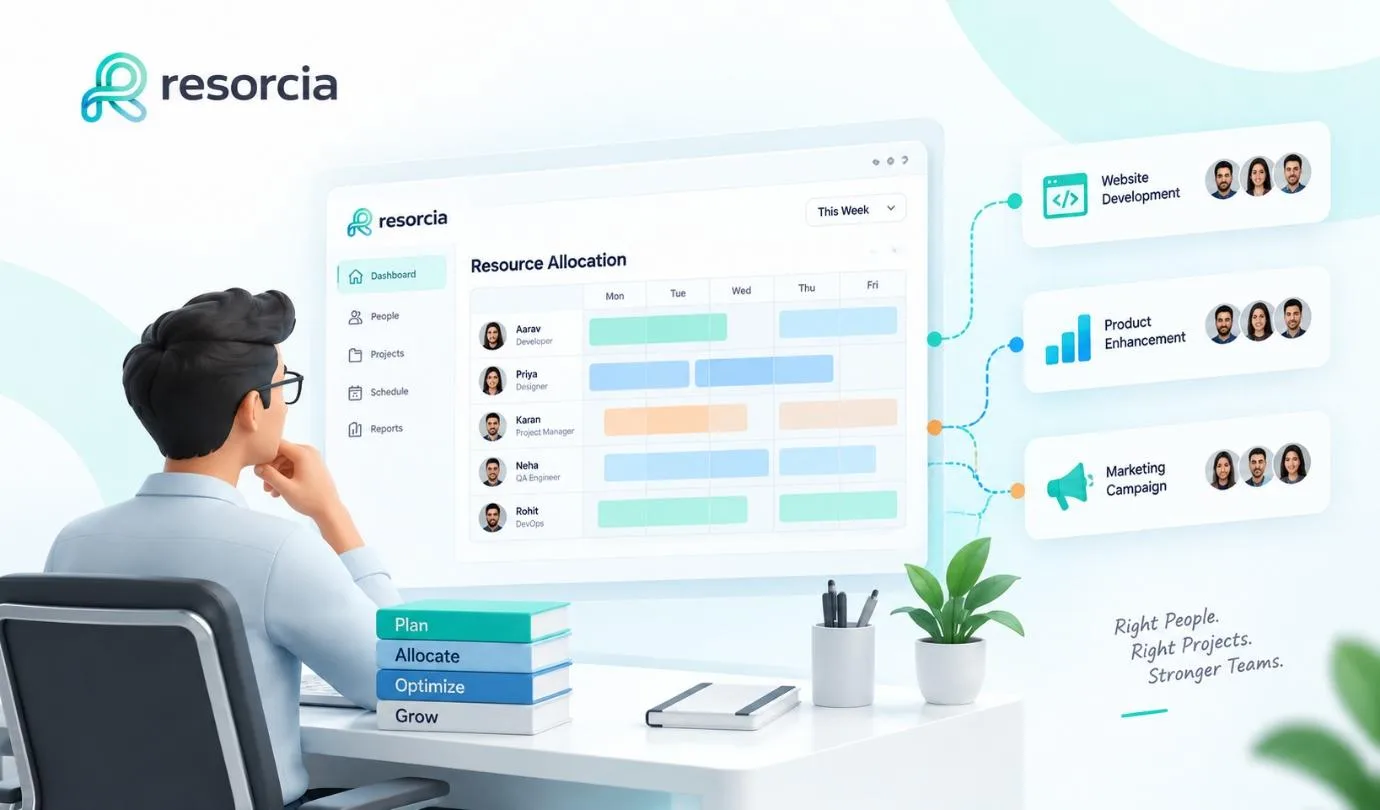
Resource allocation becomes easier when managers have a clear view of availability, workload, schedules, and actual time. Resorcia brings resource scheduling, timesheets, leave management, holiday calendars, and reporting together in one platform, giving project-driven teams a more connected view of their resources.
Teams can use this visibility to:
- Check availability before assigning work
- Identify overloaded resources
- Consider leave and holidays during planning
- Monitor project schedules and bookings
- Understand where team time is being spent
By connecting these activities, Resorcia helps teams make resource decisions based on current information rather than scattered spreadsheets or assumptions.
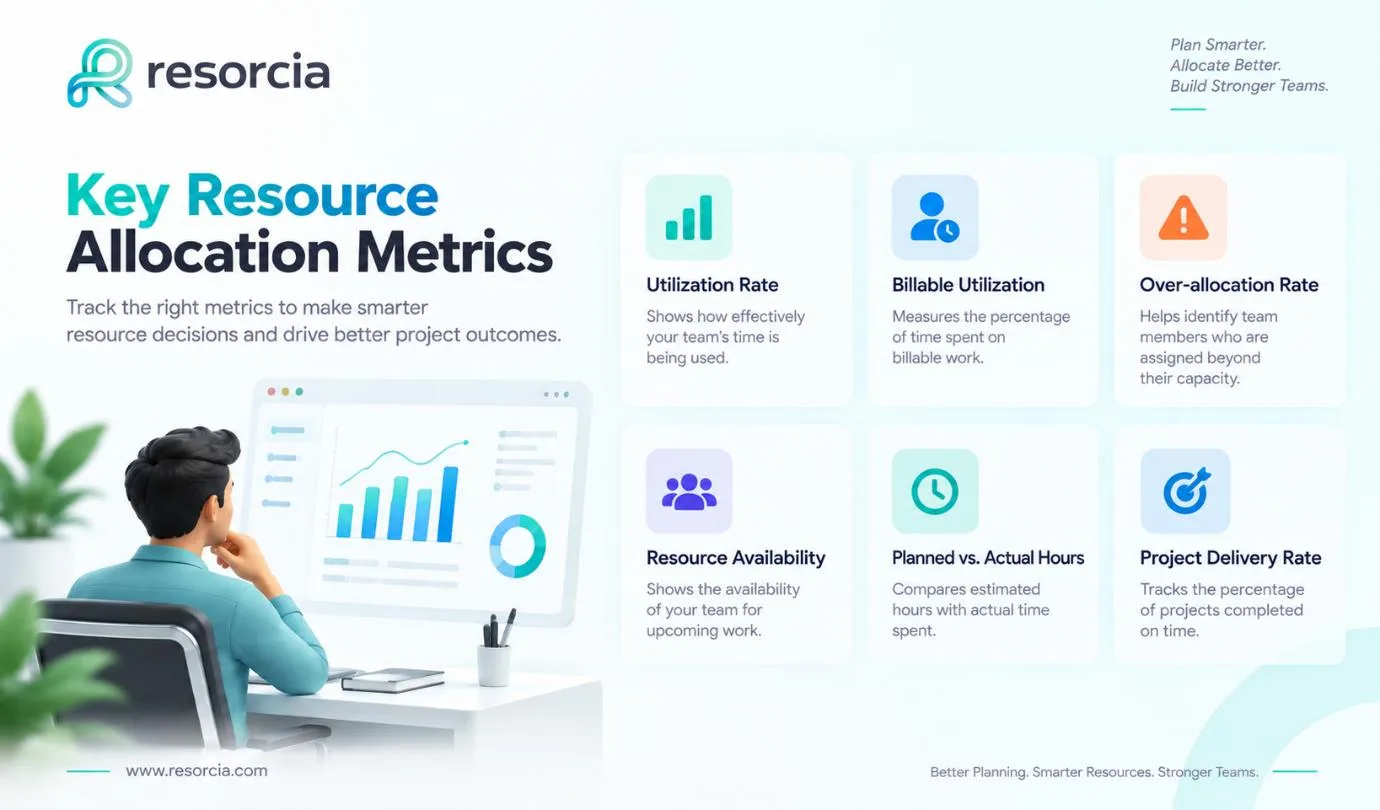
How to Measure Resource Allocation Efficiency
Measuring allocation helps organizations understand whether their planning process is actually working.
| Metric | What It Measures |
|---|---|
| Utilization rate | How much available capacity is being used |
| Billable utilization | How much capacity contributes to billable work |
| Over-allocation rate | How often resources are assigned beyond capacity |
| Resource availability | Remaining available capacity |
| Planned vs. actual hours | Accuracy of resource estimates |
| Project delivery rate | Whether projects are delivered as planned |
These metrics should be considered together. A high utilization rate does not automatically mean efficient allocation if employees are consistently overloaded.
Common Resource Allocation Mistakes to Avoid
Even organizations with formal planning processes can make avoidable mistakes.
Allocating based only on availability: A free resource may not have the right skills for the project.
Ignoring existing commitments: New assignments can create overload when current responsibilities are not considered.
Overloading high performers: Relying on the same employees for every important project can create bottlenecks.
Treating plans as fixed: Resource requirements can change, so allocation needs regular review.
Ignoring actual project data: Comparing planned and actual hours can reveal where future estimates need improvement.
Best Practices for Better Resource Allocation
Improving resource allocation efficiency is less about creating a complicated process and more about maintaining accurate information and reviewing decisions consistently.
A few practical practices include:
- Maintain an up-to-date view of resource availability.
- Match employee skills with project requirements.
- Review workload before assigning new work.
- Account for leave, holidays, and existing commitments.
- Prioritize projects when capacity is limited.
- Review resource assignments regularly.
- Compare planned hours with actual time spent.
- Use centralized information where possible.
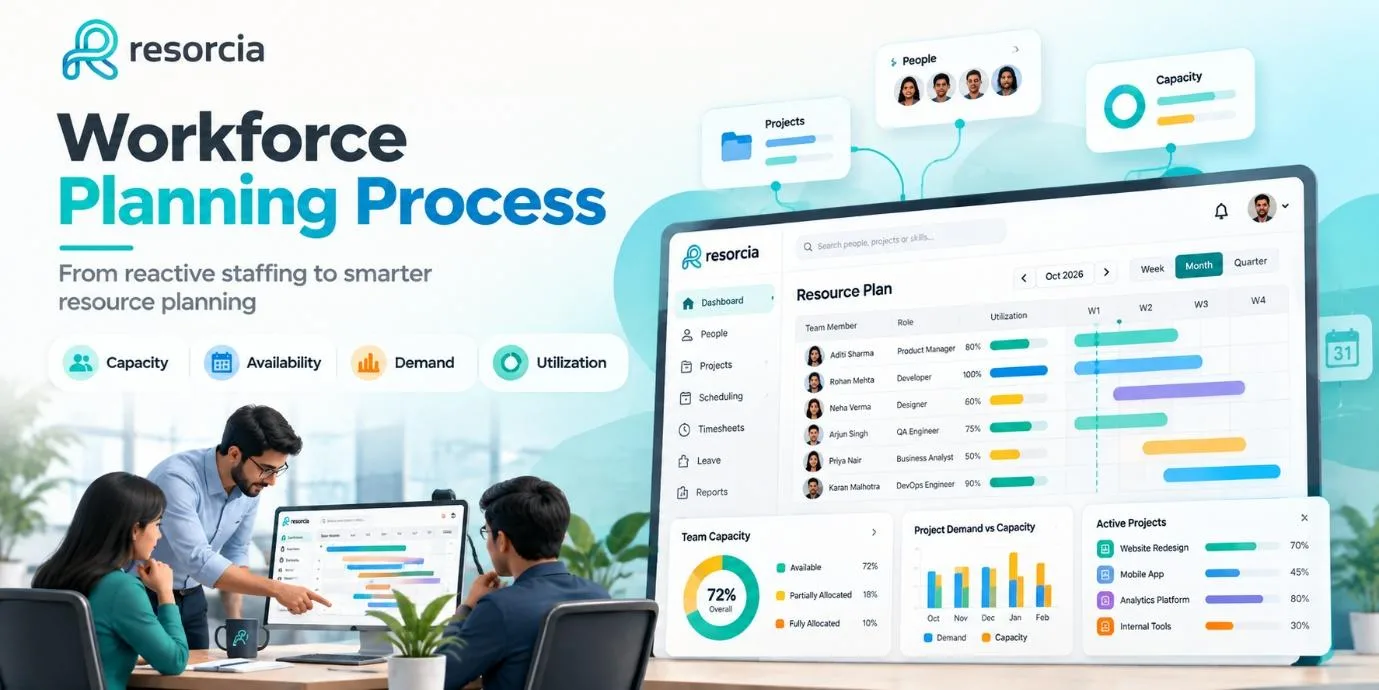
These practices can help organizations move from reactive staffing decisions toward more deliberate resource planning.
Final Thoughts
Efficient resource allocation is about making the best use of the capacity an organization already has. It requires more than knowing who is available; managers also need to understand skills, workloads, project priorities, schedules, and changing requirements.
When these factors are visible together, organizations can make more informed decisions, reduce workload conflicts, and improve project planning.
For project-based teams, tools that connect scheduling, availability, time tracking, leave, and reporting can provide the visibility needed to manage resources more effectively. Resorcia brings these activities together to help teams maintain a clearer view of their people and their time.
The objective is simple: assign the right resources to the right work at the right time, while keeping capacity and workloads realistic.